
So, you know SEO matters. Your competitors are showing up on Google, customers are finding them, and you need to understand how this works. But you’re not sure where to begin.
The good news is you don’t need to become an SEO expert. You just need to understand enough to ensure you’re making smart decisions, whether you’re doing this yourself or hiring help.
This guide cuts through the noise with up-to-date (2026) tactics and as little jargon as we can manage. Practical SEO knowledge that will help your business get found online.
Why This SEO Guide Exists
After building and rescuing dozens of failing content operations, I’ve seen the same patterns repeating: Business owners waste time and money on SEO because they don’t understand the fundamentals. They hire the wrong agencies. They chase tactics that don’t work. They give up too soon.
This guide focuses on the fundamentals, simplifying the sometimes overwhelmingly complex world of SEO into (what we hope are some) straightforward and actionable tips.
What Is SEO?
Before we dig in, let’s talk about what SEO (Search Engine Optimisation) actually is. It’s an acronym that gets thrown around a lot, and part of the reason it can seem so mysterious is that SEO isn’t just one thing.
SEO encompasses a range of disciplines and tactics. You have technical SEO, which concerns itself with things like page speed, Schema markup, Google indexing, crawlability, meta descriptions, and title tags.
Then you have on-page SEO. This is all about keywords, readability, content structure, depth, authority, and a dozen other small ranking factors.
Then you have off-page SEO, which encompasses things like backlinks and brand mentions. Even your social media presence and paid ad campaigns can contribute to your search engine visibility.
A lot of SEO specialists specialise in just one area. For example, backlink builders provide an SEO service and often market themselves as SEO experts. But, it’s important to remember they are just one part of it.
When you talk about SEO you’re talking about the whole pie, not just one slice of it. You need to take a holistic approach to your Google visibility, and this is especially important in 2026 with AI and language models changing how people leverage internet content and data. Things like brand mentions and Reddit presence have become increasingly important.
The Business Owner’s SEO Guide
Now, all of that might sound well and good, but it’s a lot. And this is where the overwhelm happens.
So it helps if you think about it like building a house. Every brick is important, but you can’t start with the roof. You need to lay them one at a time with proper foundations and eventually you’ll have an SEO fortress you can be proud of.
Here’s how I prioritise SEO for businesses:
1. Start with your audience
As with any part of your business, start your SEO by understanding your audience, their pain points and the questions they’re likely to be asking, and how your product provides a solution (this last part is crucial as getting this right is what will drive leads, trials, conversions).
Ask yourself:
- What are my customers searching for?
- What language do they use?
- What problems are they trying to solve?
- What pain points does my product solve?
From there you need to build out your primary and secondary keyword lists (don’t worry if it’s not perfect right now).
Your primary keyword list is the top 25-50 keywords that, should someone type them into Google, you want to be ranked in a top 3 position for. Your secondary keyword list is related long-tail keywords.
2. Get the technical side right
Mistakes here can cost you big when it comes to Google’s ranking algorithm.
- Can Google find and crawl your website?
- Is your site fast and mobile-friendly? (You need a page speed of less than 2.5 seconds on 4G)
- Are there technical errors blocking success?
You’ll also want to ensure that you’ve submitted your sitemap to Search Console, added descriptive meta descriptions to every page (including your target keywords), got title tags defined, and properly defined your H1, H2, and H3 tags on-page. Other things to think about include image size and Alt text.
3. Develop authoritative content (On-page SEO)
Next you have to engage in an ongoing battle with Google. This means developing authoritative, unique, and valuable content that directly answers your target audience’s most burning questions.
For example, if you’re selling moisturiser you want to appear first in the search should someone type in a question like “How to choose the right moisturiser”.
You do this with content.
Now, you can’t just write whatever content you feel like. You have to start with your audience’s pain points, then establish if the data supports your theory (look at keyword volume), and then you need to write a piece of content that is fundamentally better than everyone else’s.
How do you make a content that is better? And how do you judge what is better? Well, this is where E.E.A.T. signals come in.
Experience – Demonstrate first-hand, real-world involvement with your topic through detailed personal insights.
For example: If you’re writing about property investing, you should be able to demonstrate real-world experience in the industry, i.e. managing your own rentals.
Expertise – Show deep, specialised knowledge through credentials, qualifications, or demonstrable mastery of your subject.
Example: Include bylines like “Written by Sarah Chen, ARLA-qualified letting agent and NRLA member” or feature case studies with specific metrics.
Authoritativeness – Build recognition as a go-to source within your industry through citations, mentions, and reputation signals.
Example: Earn backlinks from industry publications, get cited in government consultations, speak at conferences, or be quoted as an expert in mainstream media coverage.
Trustworthiness – Provide accurate, transparent, and reliable information with proper sourcing, especially for finance and health topics.
Example: Make sure to link to trustworthy sources (especially important for any statistics) Include clear author bio pages, transparent business registration details, and proper fact-checking with dated references to legislation.
4. Off-page SEO
This is where backlinks, brand mentions, and social media presence all come in. Reddit is especially important in 2026 if you want to optimise for AI search.
Building off-page SEO is hard. Especially for small businesses and new businesses without existing brand recognition. But there are quick wins everyone can leverage:
- Directory listings – Get listed in relevant industry directories (not spammy general directories). If you’re a local business, prioritise local directories—you don’t need to optimise for the whole world if you’re only servicing a small area. Think Yell, Thomson Local, industry-specific directories like ARLA for letting agents.
- ABC link exchanges – Avoid direct reciprocal links (you link to me, I link to you). Instead, arrange three-way exchanges: Site A links to Site B, Site B links to Site C, Site C links to Site A. This looks more natural to search engines.
- Guest posting on relevant sites – Not for links alone, but to reach new audiences. Target industry publications, complementary businesses’ blogs, or trade association websites. One quality guest post on a relevant site beats 50 on generic marketing blogs.
- Press releases – Press mentions are a great way to get high-value links.
There are lots of things you can do early on or if you don’t have a big budget. The big problem is that it’s immensely time-consuming, which is why there are so many backlink builder SEO experts out there.
5. Measure, monitor, optimise
Finally, you’ve got to remember that SEO is an ongoing process. It takes time. You need to constantly review it. Small technical mistakes—new images that are too big, missing Alt text, 404 pages, broken links—can all compound.
And you also have to remember why you’re doing this. You’re doing this to increase profits. Don’t chase vanity metrics. It’s great to see traffic increasing, sure, but is that resulting in more leads, more customers? If not, you need to figure out where that traffic is coming from and see if you can’t optimise that page for lead capture.
- Monitor your site’s technical SEO over time (I like to do quarterly checks)
- Look at the whole funnel, not just page views
- Optimise your site for lead capture and conversion
What Actually Moves the SEO Needle?
This is the part of the article where I hit you with an uncomfortable truth: SEO cannot be won overnight. You can’t wave a magic wand or use AI to generate 100 articles and hope to win traffic.
Google’s algorithms are smart. AI algorithms are smarter. And the algorithms reward the same behaviour they’ve been trying to reward since the beginning—they want to front up the most genuinely useful piece of content first.
That’s why there is such a broad array of ‘ranking factors’. From everything we’ve already discussed, to time spent on page, clicks and on-page engagements, reviews and testimonials, even the number of times your brand appears in those “Best of” listicles. And the algorithm has feedback loops that reward established brands for their staying power.
SEO then is all about the long game.
It’s about consistency.
It’s about quality.
And it’s never as simple as publishing an article, no matter how good that article is.
AI, SEO, AEO In 2026: What’s Changed?
Is SEO still worth it in 2026? That’s the big question people are asking today.
Short answer: yes. Long answer: AI has fundamentally changed how people search for information, and that, in turn, has changed SEO.
You’ve probably noticed it yourself. You ask ChatGPT or Claude a question instead of Googling it. Or you Google something and get an AI-generated answer right at the top then there’s no need to click through to a website.
As someone trying to get traffic to your site, how are you supposed to compete in this new world?
The answer is Answer Engine Optimisation (AEO).
What’s actually changed:
Click-through rates have plummeted
When Google or an AI gives you the answer directly, you don’t need to visit websites.
Average organic click-through rates for queries with AI Overviews dropped 61% between June 2024 and September 2025 (from 1.76% to 0.61%), while paid CTRs crashed 68% (from 19.7% to 6.34%).
Even queries without AI Overviews saw organic CTRs fall 41% year-over-year. 60% of Google searches now end without any click to a website, up from 58% in 2024.
This means traditional SEO metrics (traffic, page views) don’t tell the whole story anymore—you need to focus on conversions and brand visibility, not just clicks.
Google prioritises products and services over comparison content
Those “10 Best X for Y” listicles? They’re not dominating search results like they used to. Google wants to show you the actual product or service, not another middleman’s opinion. If you’re selling something, that’s good news. If you’re an affiliate site, it’s challenging times.
Search behaviour has split in two directions
ChatGPT now has 800 million weekly active users and processes over 2.5 billion queries per day—people are increasingly using AI for quick, straightforward answers.
But for anything important—buying decisions, health advice, financial planning—they’re seeking human validation through forums, video content, and first-hand experiences.
58% of Reddit users find the platform more trustworthy than Google, with 41% believing Reddit is a better search engine than Google. Reddit’s website traffic surged 39% year-over-year, directly attributed to increased visibility in Google search results.
Brand mentions matter more than ever
AI models scrape the entire web for context. If your brand keeps appearing in Reddit threads, forum discussions, and user-generated content as a trusted recommendation, you’re building AEO equity even without traditional backlinks.
1 in 10 small business owners say a Reddit page ranks above their business page in Google search results.
What remains true:
The fundamentals haven’t changed
Google and AI models still reward the same thing they always have—genuinely useful, authoritative content from trusted sources.
E.E.A.T. signals matter more, not less. Technical SEO still matters. Quality content still wins. The difference is how and where that content gets discovered and validated.
However, you can’t optimise just for Google anymore. You need to think about searcher behaviour, about how your customers are actually looking for information today.
And this means taking a more holistic approach to your SEO. You want to be referenced by AI searches, talked about in Reddit threads, receive YouTube reviews, and rank in traditional search.
Thankfully, foundations remain the same: be genuinely helpful, build real authority, take a multi-channel approach, and create content people want to reference. This is what people and AI models will pick up.
The game has changed. But, the principles haven’t.
SEO Tools You Actually Need
You don’t need a dozen expensive subscriptions to do SEO properly. You need a handful of tools that give you visibility into what’s working and what’s broken. Here’s what I use and recommend:
The Non-Negotiables (Free SEO Tools)
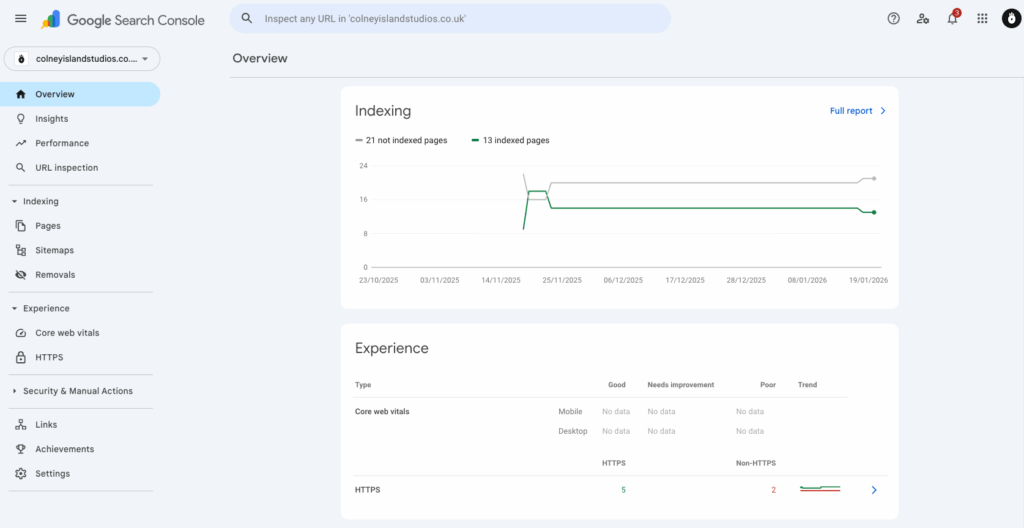
Google Search Console – This is your window into how Google sees your site. It shows you which keywords you’re ranking for, which pages are getting clicks, indexing errors, mobile usability issues, and more. If you only use one tool, use this. Set it up first, check it weekly.
Google Analytics 4 – Track where your traffic comes from, which pages convert visitors into customers, and how people actually use your site. Don’t just look at page views—follow the journey from landing page to conversion. That’s where the insights live.
PageSpeed Insights – Google cares about page speed, especially on mobile. Run your key pages through this tool regularly. Aim for under 2.5 seconds on 4G. Anything over 3 seconds and you’re losing customers before they even see your content.
The Premium Tools (Worth The Investment)
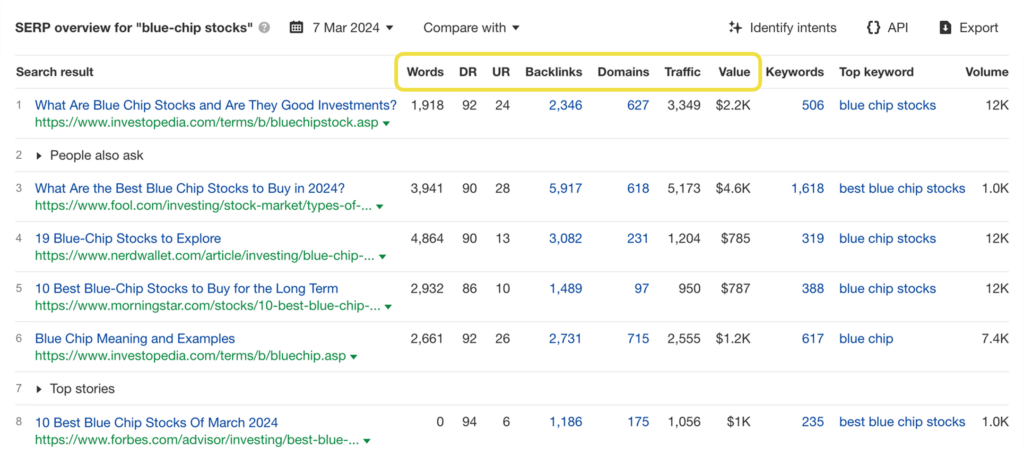
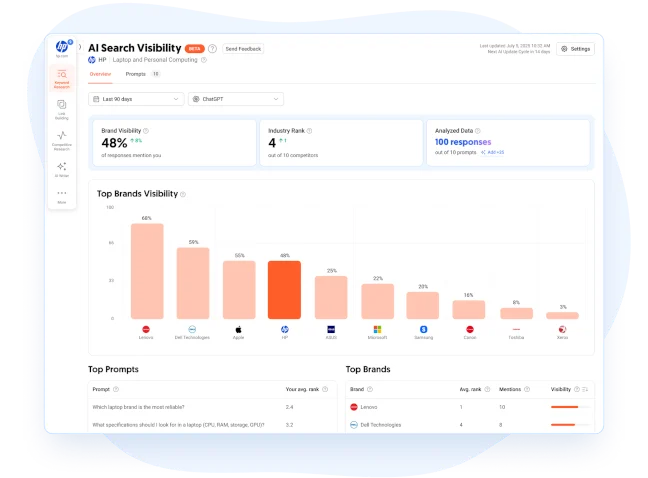
You’ll eventually need a comprehensive SEO platform. I use Ahrefs, but SEMrush and Moz are solid alternatives. Pick one based on your budget and stick with it—they all do roughly the same job.
What you get with these tools:
- Keyword research with search volume and difficulty scores
- Backlink analysis (yours and your competitors’)
- Site audits that catch technical issues automatically
- Rank tracking so you know if you’re moving up or down
- Competitor analysis to see what’s working for them
Ahrefs is generally considered the best for backlink data. SEMrush has better PPC and advertising features if you’re running paid campaigns alongside organic. Moz is the most beginner-friendly.
That said, don’t pay for a premium tool until you’ve exhausted the free options and you’re ready to scale. But when you’re serious about SEO, one of these platforms will save you dozens of hours every month.
Other Useful SEO Tools
Screaming Frog (free up to 500 URLs) – Great for technical audits. Crawls your site like Google does and flags issues.
Ubersuggest (free version available) – Budget-friendly alternative to Ahrefs if you’re just getting started.
Answer The Public – Free keyword research tool that shows you actual questions people are asking.
Your 90-Day SEO Checklist
Use this checklist to get your SEO foundations right. Don’t try to do everything at once, tackle these gradually over 90 days.
Month 1: Foundation & Technical
- Set up Google Search Console and Google Analytics
- Submit your sitemap to Search Console
- Run a technical audit (use Screaming Frog free version or Ahrefs Site Audit)
- Fix critical errors: broken links, 404 pages, redirect chains
- Test mobile-friendliness and page speed (aim for under 2.5 seconds)
- Add meta descriptions and title tags to your top 10 pages
- Create primary keyword list (25-50 keywords)
- Create secondary keyword list (50-100 long-tail variations)
Month 2: Content & On-Page
- Audit existing content—what’s working, what’s not?
- Identify content gaps based on your keyword research
- Write or optimise 4-6 pieces of content targeting primary keywords
- Ensure each piece demonstrates E.E.A.T. signals
- Add proper H1, H2, H3 structure to all pages
- Optimise images (compress, add Alt text with keywords)
- Internal linking—link relevant pages to each other
- Create or update author bio pages
Month 3: Off-Page & Monitoring
- Claim your Google Business Profile (if local)
- Get listed in 5-10 relevant directories
- Write and publish 2-3 guest posts on relevant sites
- Sign up for HARO and respond to 5 journalist queries
- Engage authentically on Reddit (join 3-5 relevant subreddits)
- Set up rank tracking for your primary keywords
- Review Search Console performance report
- Identify which content is driving traffic vs conversions
- Adjust strategy based on what’s actually working
Ongoing (Every Quarter)
- Technical audit for new issues
- Content performance review
- Update outdated content with new information
- Continue building backlinks and brand mentions
- Track ROI—traffic is nice, but are you getting customers?
Final Words: SEO Guide 2026
SEO is hard work. It’s slow. It’s frustrating when you publish something brilliant and it sits on position 20 for months. Or when Google releases a core update that sees your top content suddenly drop to page 2.
Which is why most businesses give up before they ever really get going. Most never get the technical fundamentals right. Most write content that doesn’t actually help their customers.
But, you don’t need to be perfect. You just need to be consistent, patient, and willing to learn as you go. If you follow the hierarchy in this guide. Audience first, technical foundations, authoritative content, strategic off-page work, constant optimisation, and you will see results.
It might take three months. It might take six. But when it clicks, when that organic traffic starts flowing and leads start converting, you’ll have built something sustainable and scalable. Something your competitors can’t just buy their way past.
Over the next few months, we’ll be creating full-length blog posts that go deeper on backlinking strategies, technical SEO, and content planning and more. Sign up for our newsletter to get those delivered straight to your inbox.
And if you’re looking for SEO services or just want to chat about whether your current approach is working, get in touch with us at Colney Island Studio. We’d love to see how we can help.